
In the world of chemicals, there are enough different chemical names and numbers (not to mention acronyms!) to confuse anyone. Just when you think you’ve gotton it figured out… “Bleach is also called Sodium Hypochlorite – got it!” – an acronym change gets thrown your way – “MSDS’s will now be called, simply, SDS’s.” Whew! What’s a person to do? And, what are these mysterious looking codes on most chemical products, called ‘CAS #’ – and why do they matter?
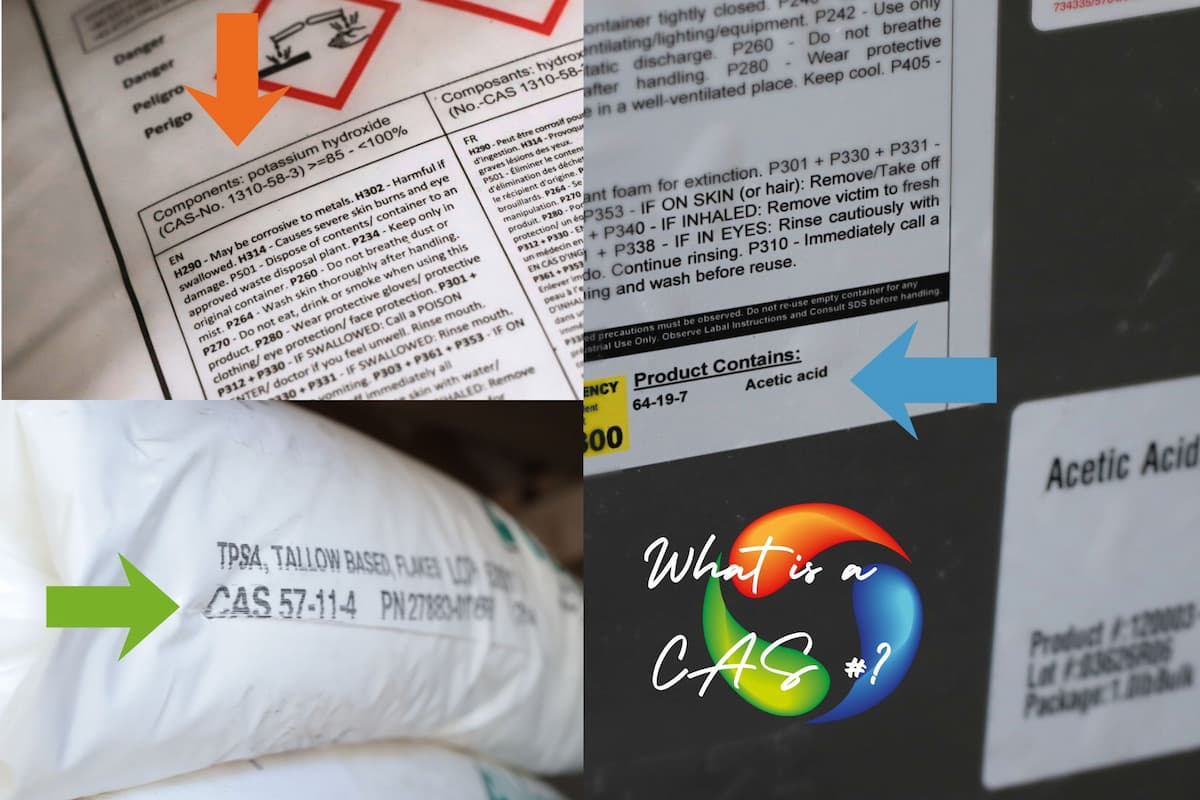
(Please excuse my dashes (-). This blog is being written by a human, not ChatGPT, who can simply not stop using dashes!)
Well, friend… you’re in luck. If you’re confused by all the crazy names, you can think of the constant, steady CAS # as a friend – a pillar of reliability amongst the chaos of unreliable chemical names!
A CAS # is a unique, numeric identification used to recognize a specific chemical.
For example: Glacial Acetic Acid may go by: Ethanoic Acid, Vinegar Acid, Methanecarboxylic Acid, or Hydrogen Acetate;
But it only has one CAS #: 64-19-7.
Why Do Chemicals Have So Many Names?
If you open up one of our product pages, there is a good chance that one of the first fields you see – “Synonyms” – will contain a long list of names. Some of them may sound familiar; some will be unreadable; but all of them may be used to describe the chemical product available for sale on the page.
But why do chemicals have so many names – when it would be so much easier on all of us, if they just went by one, single name?
(“Hello, my name is Bob… but some folks call me by my last name, ‘Miller’… but the guys call me Tiny (yeah, I know, I’m Not tiny!).. but, um, originally, I was called Bubs. Or, Bobby. Or, Robert. Yeah… I think originally I was called Robert.” Whew!)
Like people, chemical names usually come from a variety of sources: traditional names, historical names, chemical names, market names, generic names, shortened names, or names based on chemical properties or origins (i.e. where it was first discovered, or how it looks or smells.) (…Hey, at least they don’t call him Stinky… ! Weep!)
Why CAS #’s Matter
As we mentioned before, even with a dozen different chemical names, a single chemical only has one CAS #. A CAS # is to a chemical what a Social Security Number is to a person.
If you’re trying to source a chemical product, and you have a container with a CAS # on it, it doesn’t matter what chemical name or synonym is printed on the drum or container – if you need to reorder exactly the same product… go by the CAS #.
Feel free to reach out to a CORECHEM representative if there is a specific CAS # you’re trying to source in bulk, today! We look forward to speaking with you!


